
Qi Yang
Welcome! I am an Assistant Professor in the Department of Design Studies at the University of Wisconsin–Madison. My background spans Architectural Design, Psychology, and Systems Engineering.
My research aims to create novel design tools that augment human cognition, lower barriers to design, and foster creative, evidence-based decisions in creative fields such as architecture, interior design, and human–computer interaction.
To get there, my current research focuses on:
-
Understanding complex human decision-making behaviors in physical space by empirical investigation, computational modeling, and simulation
-
Understanding how design tools shape the design process, learning, and creativity
-
Designing wise Human-AI co-creative design tools
Some broad keywords might reduce your uncertainty about me :) Wayfinding, Human-Building Interaction, Human AI Interaction, Creativity Support Tools, Metacognition, Spatial Cognition, Human Behavior Modeling, Environmental Psychology, Research through Design
Multi-Mind
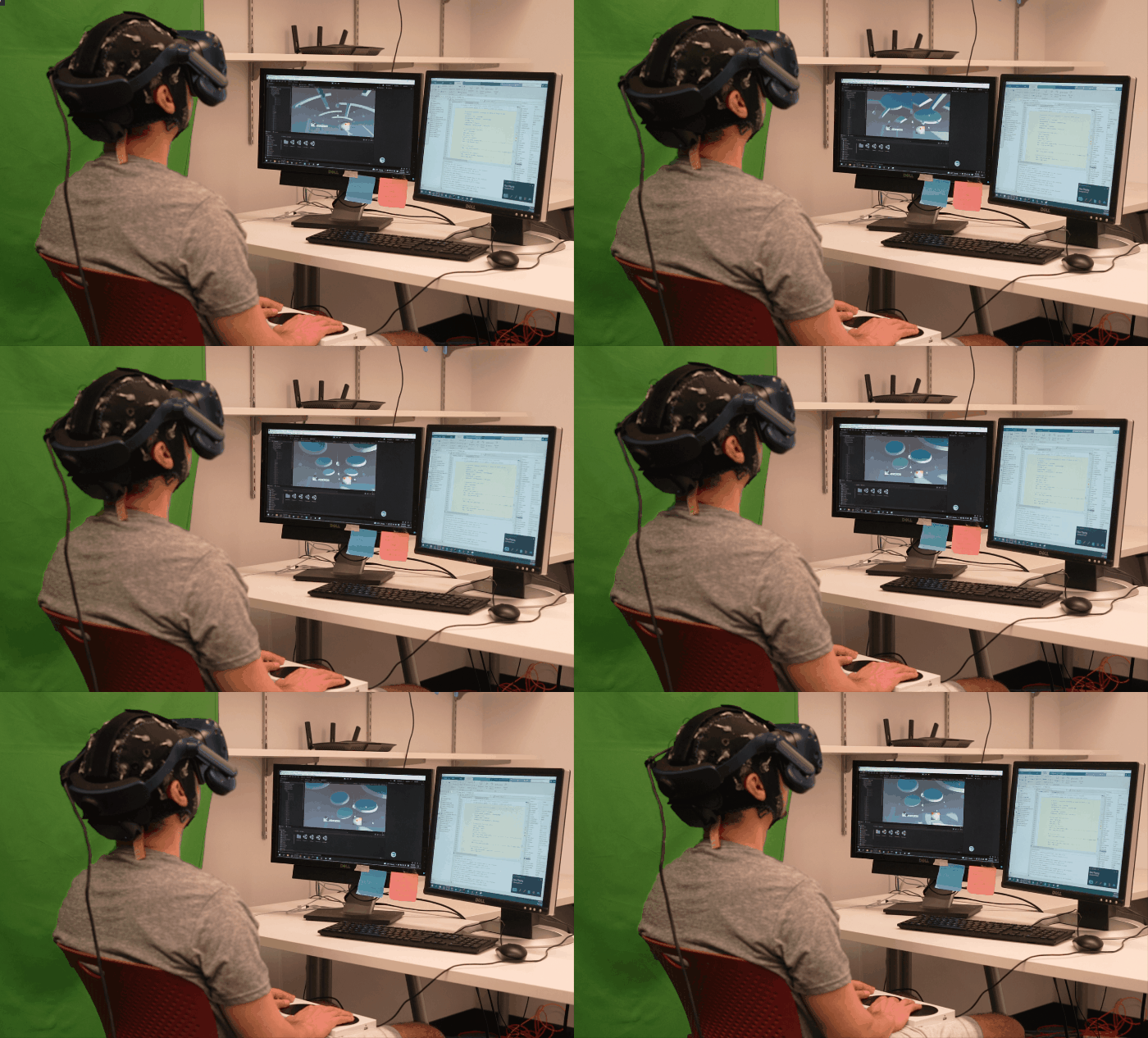
Yang, Qi, Shuo Feng, Tianlin Zhao, and Saleh Kalantari. "Design with myself: A brain–computer interface design tool that predicts live emotion to enhance metacognitive monitoring of designers." International Journal of Human-Computer Studies 185 (2024): 103229.
MindOpen
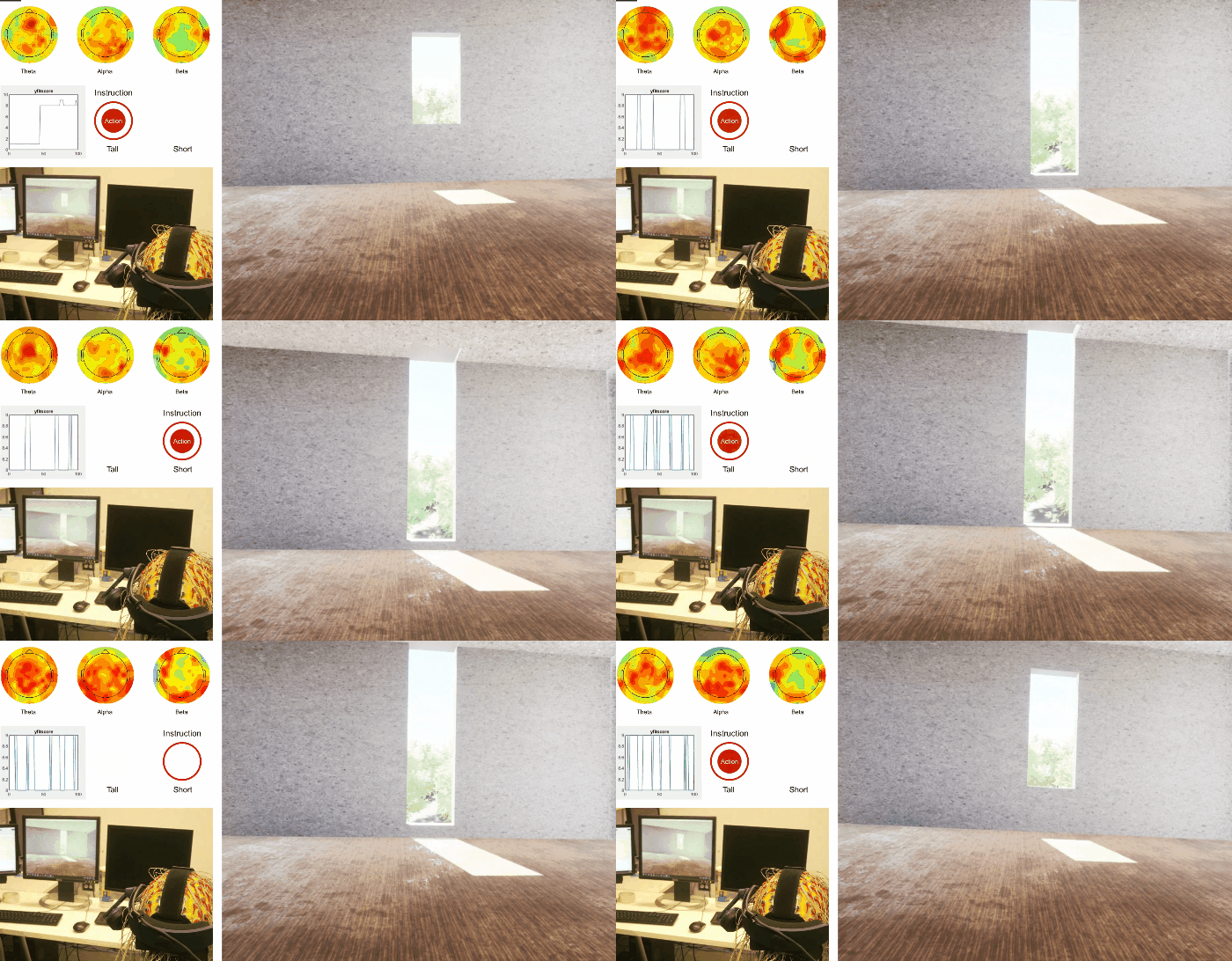
Yang, Qi, Jesus G. Cruz-Garza, and Saleh Kalantari. "Brain–computer interfaces as an architectural design tool: Feasibility and usability study." Automation in Construction 154 (2023): 105011.
MindSculpt
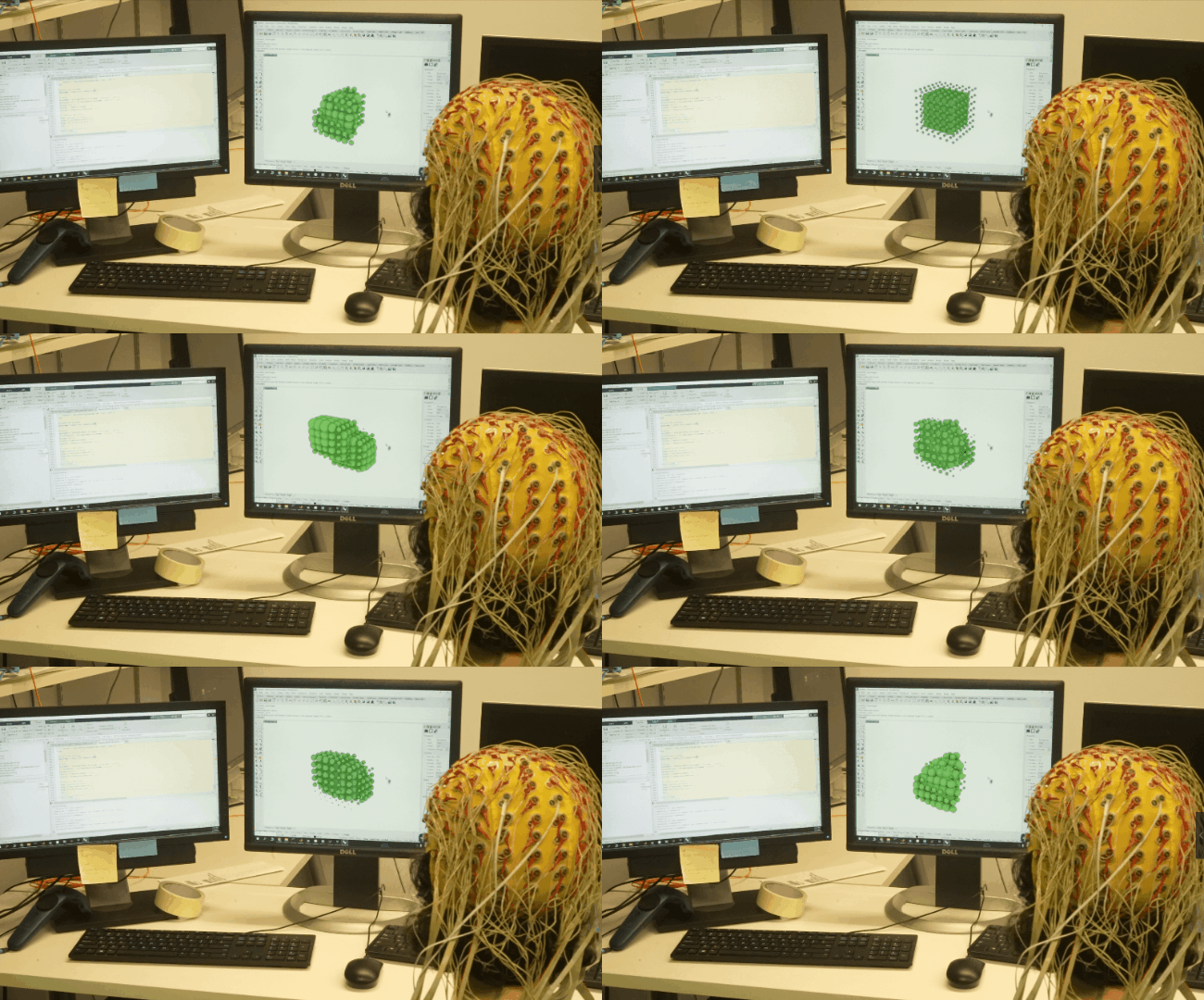
Yang, Qi, Jesus G. Cruz-Garza, and Saleh Kalantari. "MindSculpt: Using a Brain-Computer Interface to Enable Designers to Create Diverse Geometries by Thinking." Proceedings of the 41st Annual Conference of the Association for Computer Aided Design in Architecture (ACADIA 2021).
Crystal Ball
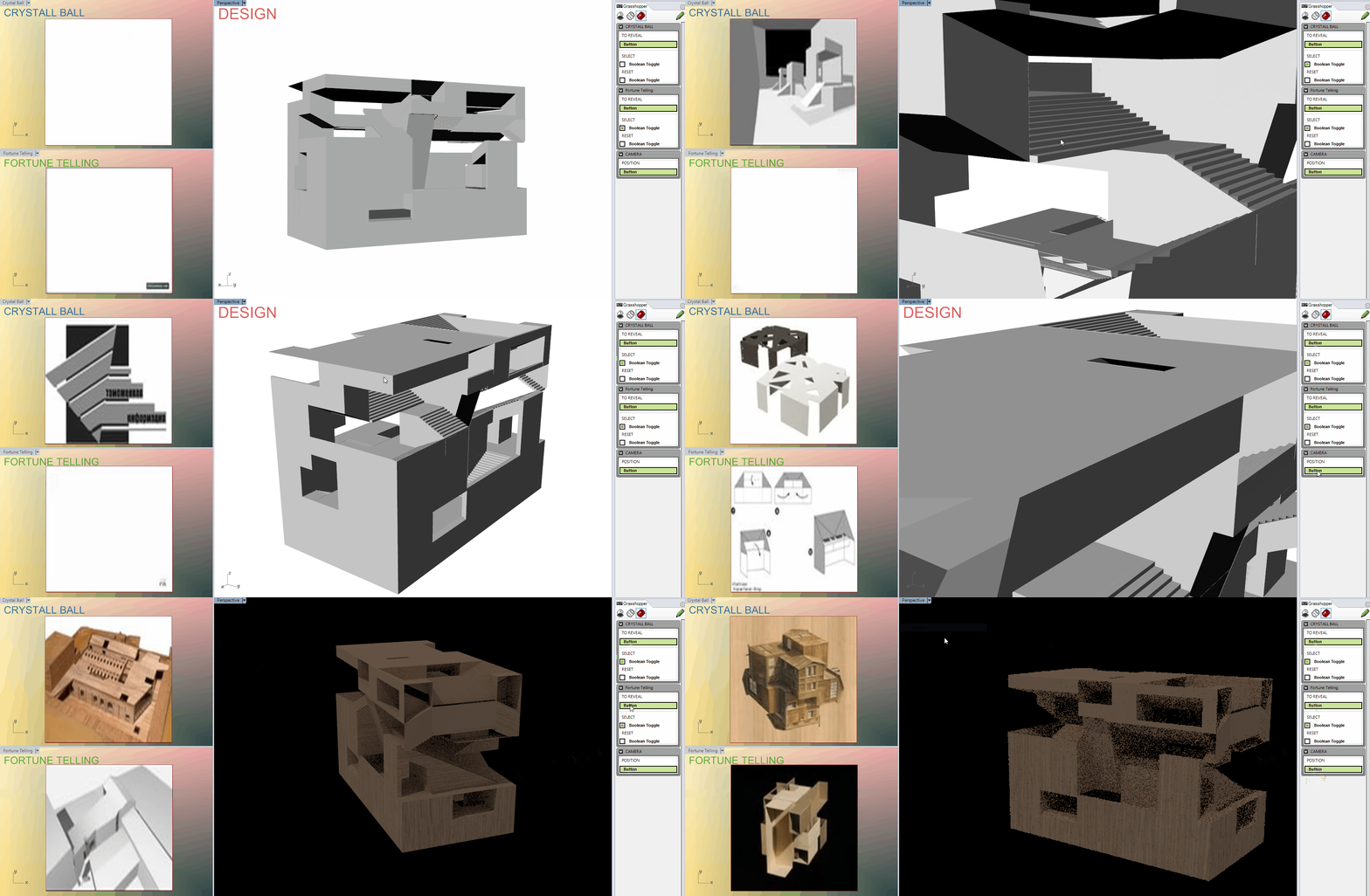
An exploration about a design tool that expands the design space and reduce design fixation, 2018
Cognitive Agent
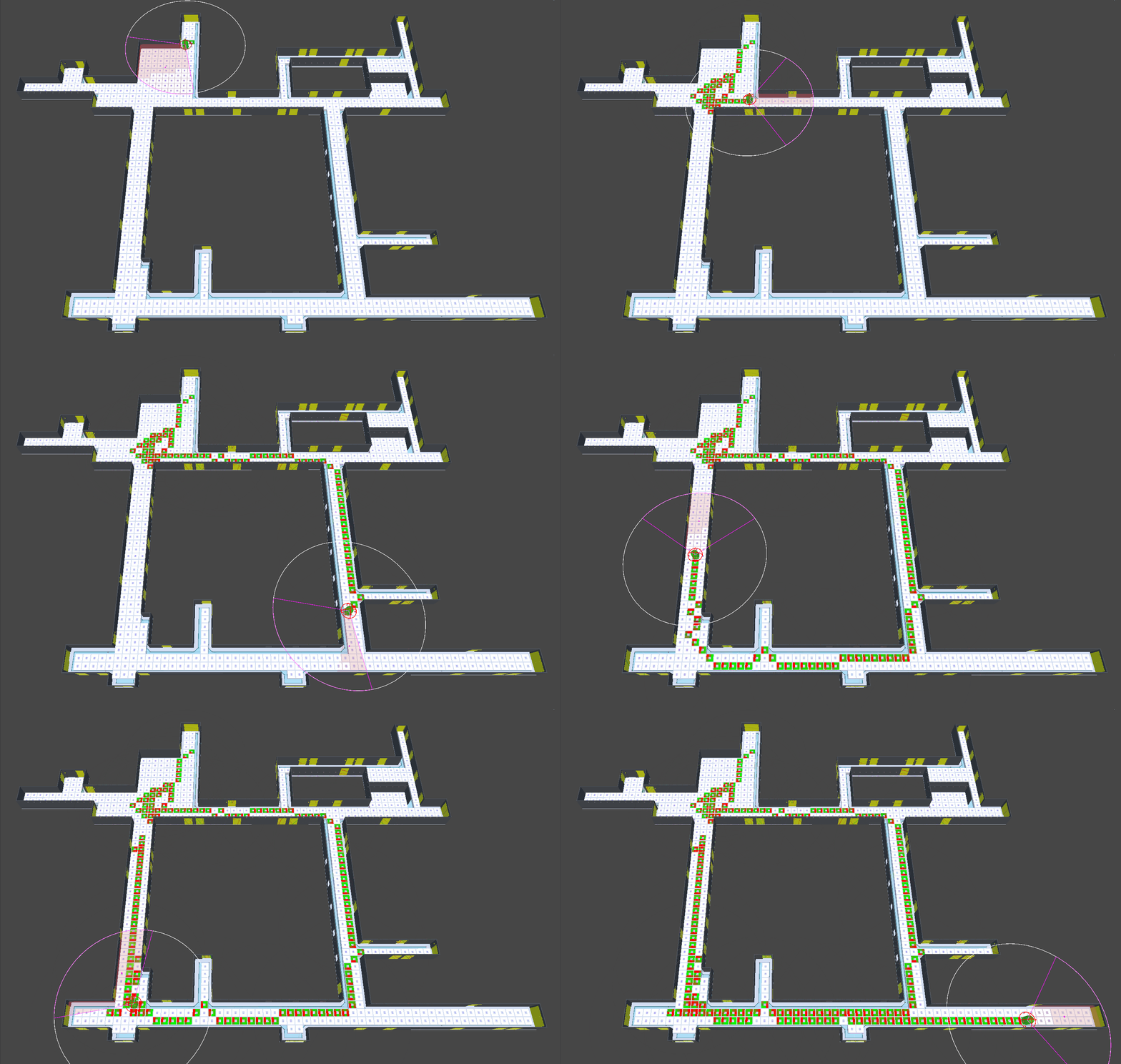
Yang, Qi, Rohit K. Dubey, and Saleh Kalantari. "PATH-U: A data-driven agent-based wayfinding model incorporating perceived path uncertainty and cognitive strategies in unfamiliar indoor environments." In Building Simulation, pp. 1-23. Beijing: Tsinghua University Press, 2024.
Measure Perceived Uncertainty Continuously

Yang, Qi, and Saleh Kalantari. "Real-time continuous perceived uncertainty annotation for spatial navigation studies in buildings." Journal of Building Engineering 82 (2024): 108250.
Validation of VR Methods in Wayfinding

Kalantari, Saleh, Armin Mostafavi, Tong Bill Xu, Anne Seoyoung Lee, and Qi Yang. "Comparing spatial navigation in a virtual environment vs. an identical real environment across the adult lifespan." Computers in Human Behavior 157 (2024): 108210.